

Your care continues.
So does their support.
In your practice, you care for people whose chronic pain or eating disorders can have a significant impact on everyday life.
FriLi App offers resources and support between appointments, complementing the care you provide.
Between appointments,
patients still need support.
Pain, fatigue, fear of movement, emotional challenges, or feelings of isolation: your patients may need guidance to help them navigate daily life.
FriLi offers an additional support option to explore with them, taking their circumstances, preferences, and existing care into account.
Two ways to support your patients.
A guided remote program or personal support, depending on each person’s needs and how independently they feel comfortable working.

Resources to explore at their own pace
FriLi App gives patients access to explanations and practices they can explore from home.
- Resources to help them better understand pain mechanisms and their own experiences.
- Practices they can gradually introduce into everyday life.
- Remote access for people who live far away or find traveling tiring.

A helping hand along the way
For people who need regular support, a trained patient partner registered with FriLi can offer a listening ear and practical guidance.
- Space to talk about the challenges they face in everyday life.
- Help using the resources and finding a manageable pace.
- Additional support alongside their ongoing medical care.

Support for daily life.
A role we can explore together.
You know your patients, their history, and their clinical circumstances. Whether FriLi support is appropriate should be considered in that context.
Remote and personally supported programs have already been introduced for patients receiving care in public and private healthcare centers.
We can discuss the resources, how the support works, and its scope and limitations, so you can explain it clearly to patients for whom you consider it relevant.
Could FriLi be a fit
for your patients?
Would you like to explore the app, learn about the MBC method, or discuss the role of additional support?
An initial conversation gives us the opportunity to introduce the approach and answer your questions, with your practice and your patients’ needs in mind.

Explore
Learn about the resources, the method, and the different support options.
Discuss
Ask your questions and consider how FriLi could fit into your patients’ care.
Talk with your patient
Introduce this option with their needs, preferences, and ongoing care in mind.

A testimonial from Dr. Eric Nectoux
Pediatric orthopedic surgeon at Lille University Hospital, France.
“I have benefited from several of the techniques presented in this Mind-Body-Connection method. I readily discuss them with my patients during consultations.”
Read the rest of his testimonial
“Emotional suffering is closely linked to chronic pain. Reading this book, I discovered a wonderful resource bringing together many techniques that had helped improve my psychological well-being. It put words and structure to the message I had been trying, somewhat clumsily, to convey during consultations!
Far from replacing evidence-based medicine, these techniques, brought together in a single method, have been the subject of validated neuroscience studies and can help people who have been suffering for a long time find a way forward.”
Translated from French. This testimonial concerns the MBC method and Lili Road’s French book, Bye bye douleurs chroniques.
Research, connections,
and professional training.
Lili Road’s journey has drawn on different approaches exploring the relationships between pain, the body, and emotions.

Dr. Howard Schubiner
Mind-Body Medicine Center · Michigan, USA
His work explores the relationships between the brain, emotions, and pain, building on the approach developed by Dr. John Sarno.

eCentreClinic
Macquarie University · Sydney, Australia
A research unit developing remote psychological treatment programs, including programs for people living with chronic pain.

Alan Gordon and PRT
Pain Psychology Center · Los Angeles, USA
Lili Road has trained in Pain Reprocessing Therapy. This approach is one of the tools used within the MBC method.

Dr. John E. Sarno
Rehabilitation medicine · New York, USA
His work on the role of emotions in certain forms of chronic pain is among the influences that have shaped Lili Road’s approach.
A method to understand,
explore, and practice.
The MBC method brings together explanations, workshops, and practices exploring the body, emotions, and the mechanisms of pain.
It has grown from Lili Road’s personal and professional journey and takes different forms through her books, the community, and FriLi’s support programs.
An approach that complements medical care, adapted to each person’s circumstances and needs.


Mind
Better understand the mechanisms of pain and make room for a greater sense of calm.
Knowledge is power.

Body
Build a more trusting relationship with your body and explore movement at your own pace.
One step at a time.

Connection
Explore the connections between the brain, the body, and everyday experiences.
Put understanding into practice.
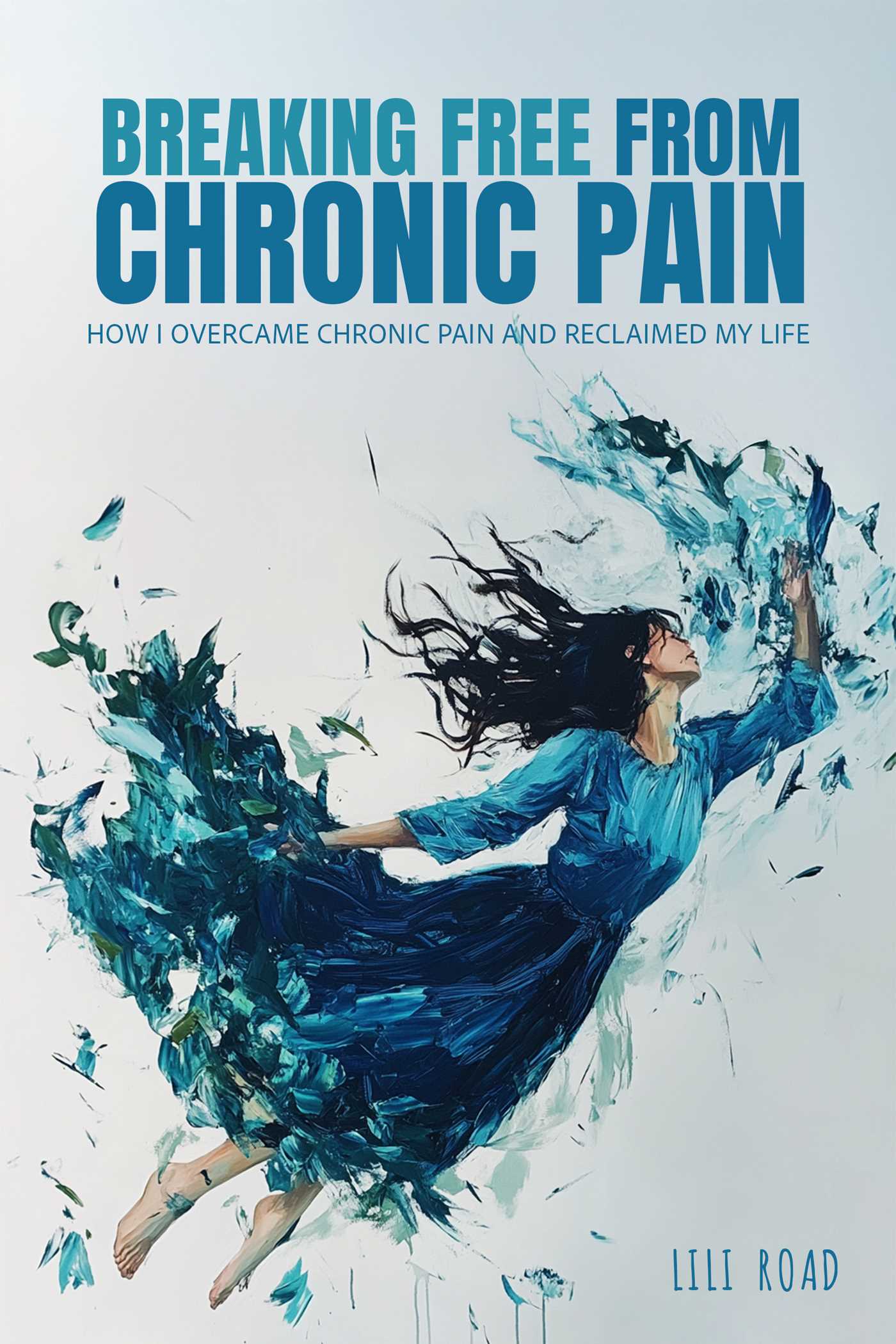
Breaking Free from Chronic Pain
In her English-language memoir, Lili Road shares her personal experience of chronic pain and her journey toward reclaiming her life.
Would you like to explore the book before discussing it with your patients, or talk with Lili about the experiences she shares?
Let’s talk about your practice
and your patients’ needs.
Would you like to explore FriLi App, ask about the MBC method, or discuss a collaboration? Tell us about your work and what you’re looking for.
Lili Road – Gheysens
Artist, author, and art therapist, Lili Road brings together personal experience and professional training in supporting others.
She holds a qualification in art therapy from the Faculté Libre de Médecine de Lille and has also trained in PRT, yoga, meditation, NLP, and hypnotherapy.
She is the author of Breaking Free from Chronic Pain , as well as the French books J’ai mal mais je me soigne and Bye bye douleurs chroniques.
More about her background
Lili Road also contributes to discussions on health, well-being, and personal development on RCF Belgium.
She holds the French agrégation in English, a Master in International Management from SKEMA Business School, and a Diplom Kauffrau from Fachhochschule Osnabrück.
Her training also includes yoga (RYT-500) and meditation (CMT-500).
